Start by identifying the kind of gathering
Cremation does not describe one service format. The family may hold a memorial with the urn or photographs present, a visitation before cremation, a celebration of life elsewhere, or no public gathering. An obituary may help, but it will not answer every delivery question.
CANA describes a memorial service as a gathering that may include cremated remains or memorabilia; the Federal Trade Commission distinguishes it from a funeral ceremony with the body present. Ask the family contact or funeral director which format is planned. If there is no gathering, send flowers to a confirmed home address instead of guessing at a funeral-home delivery.
Match the arrangement to the display
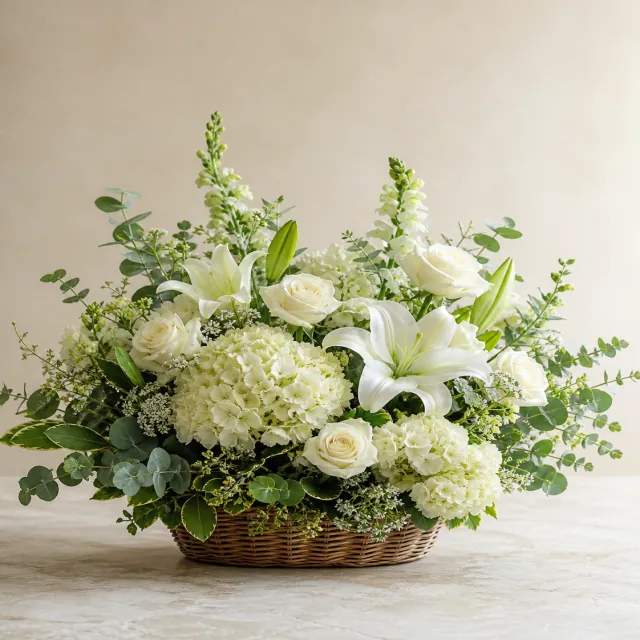
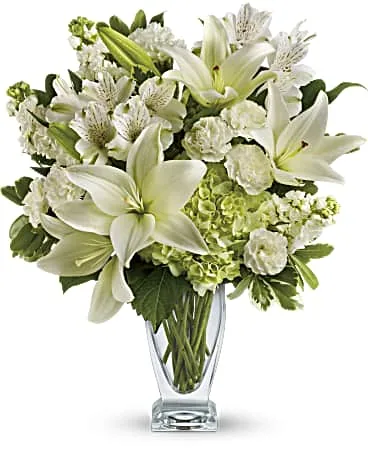
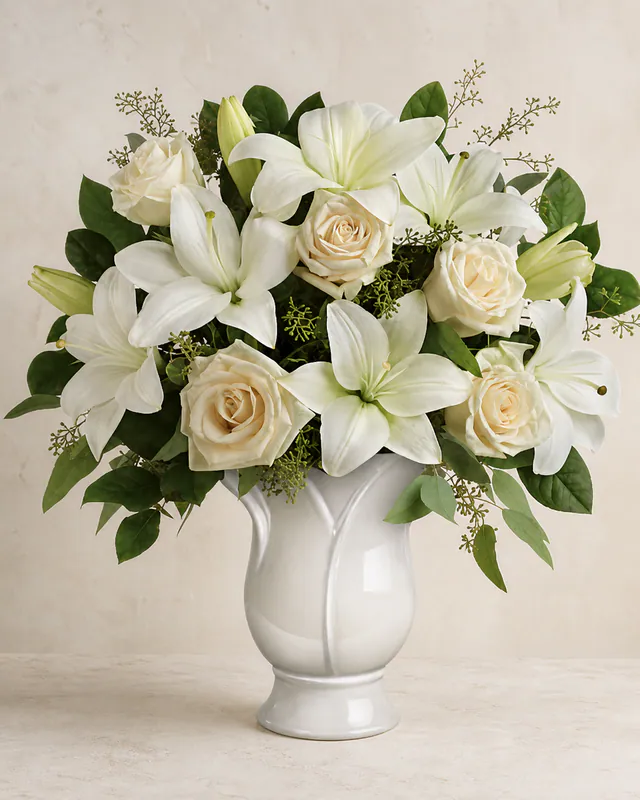
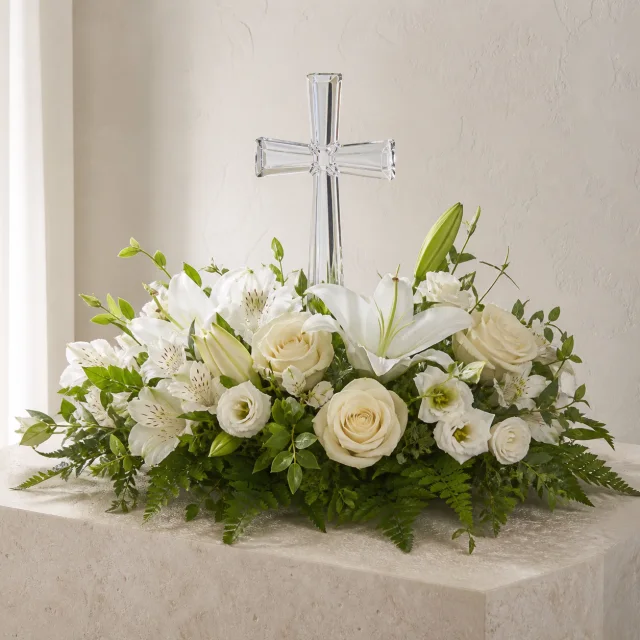
A low vase or compact basket works on a remembrance table because it leaves room for a photograph, guest book, program, or keepsake. Ask for finished height and width, not only table length. A tall design can block the urn or people speaking during the service.
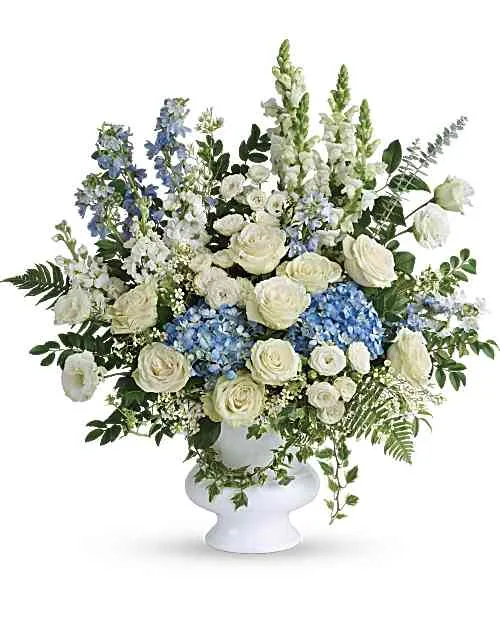
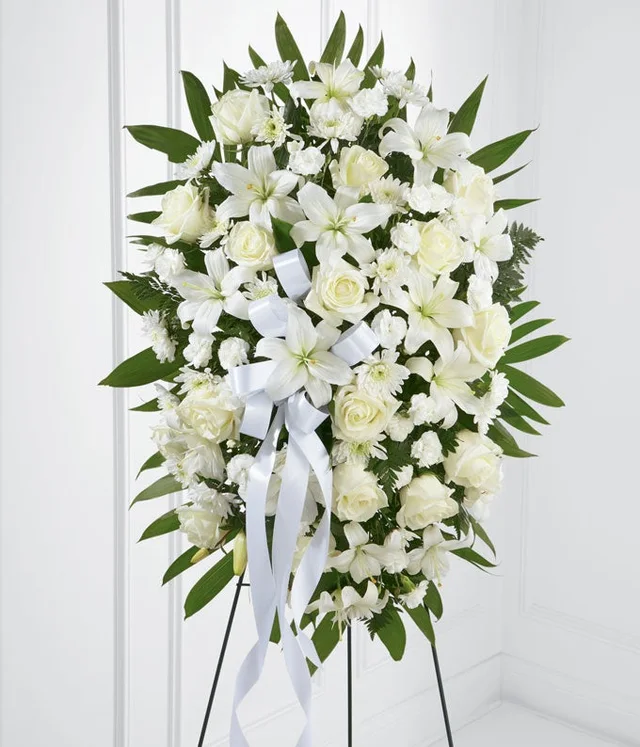
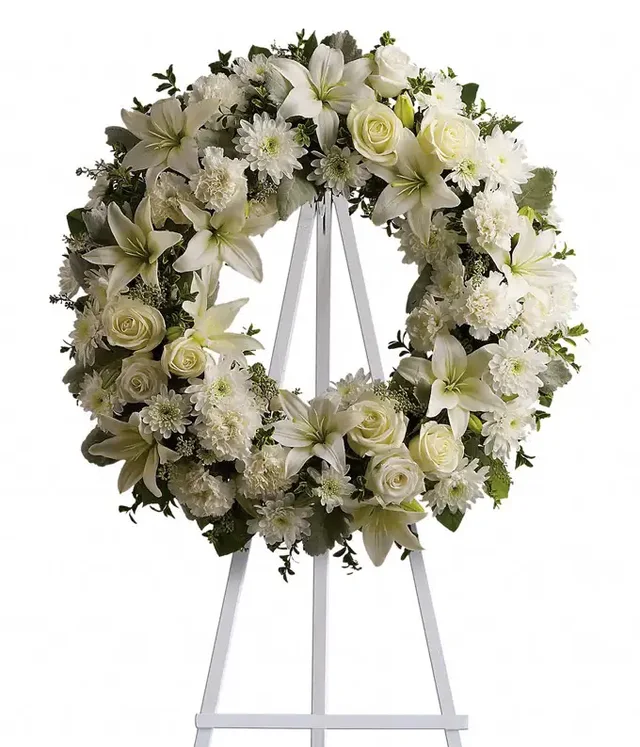
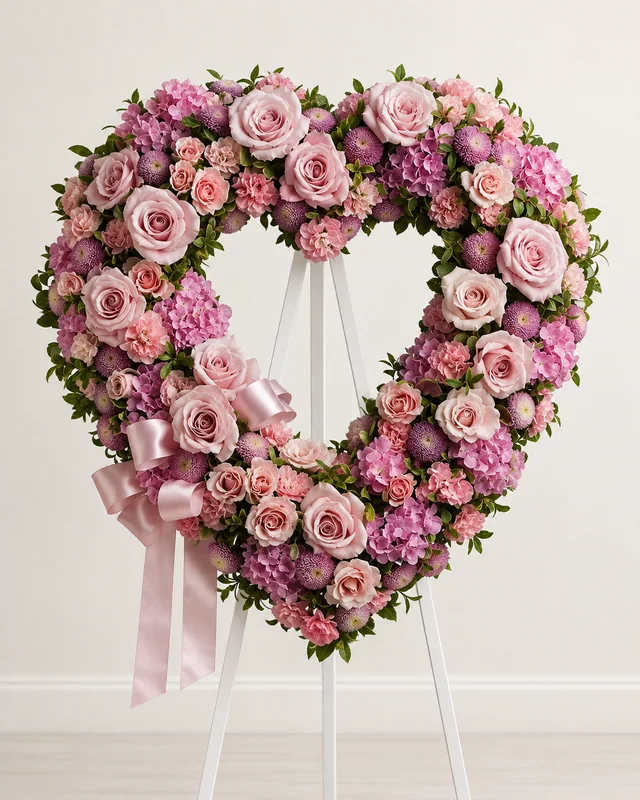
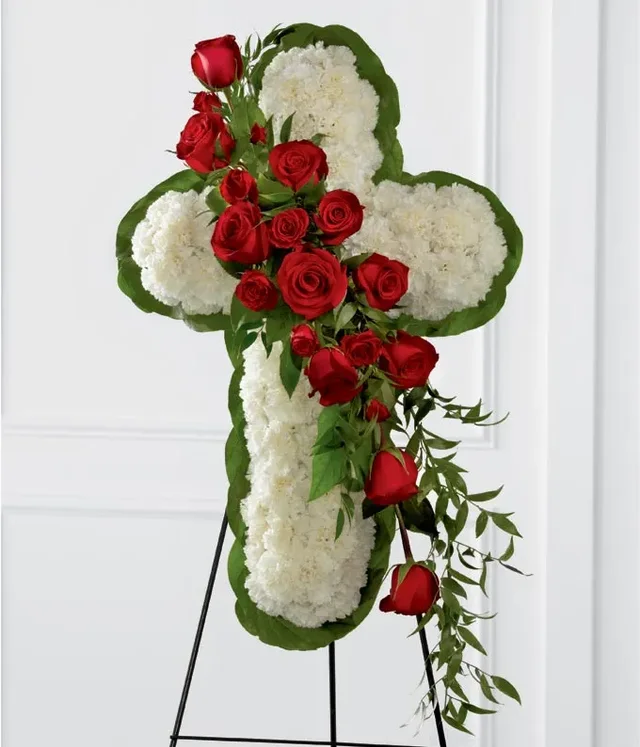
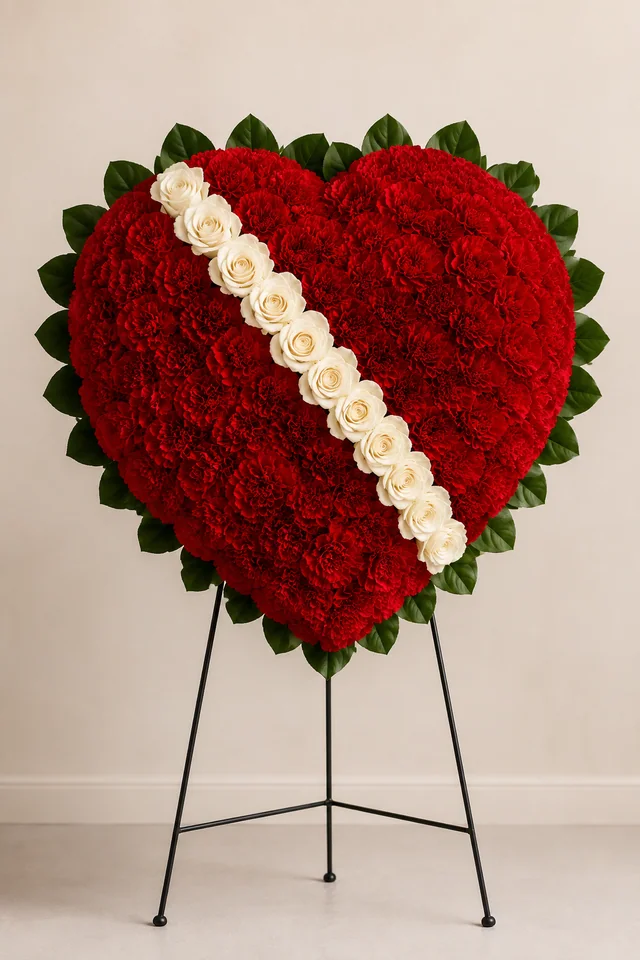
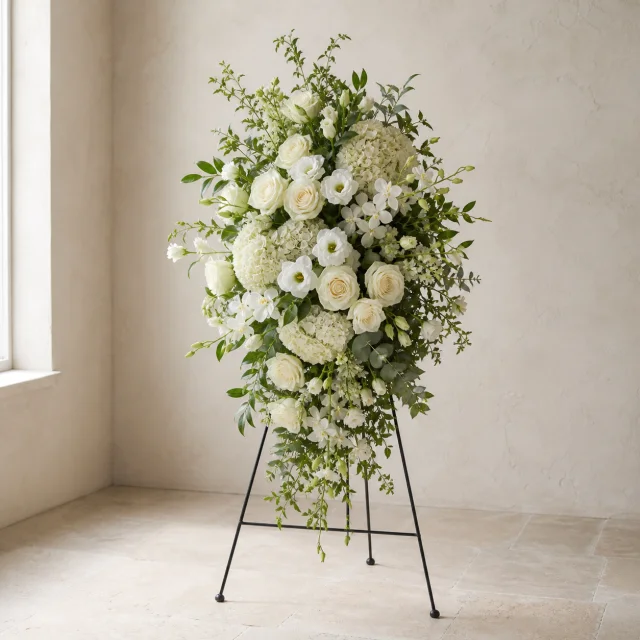
A floor basket can mark the entrance without an easel. A standing spray or wreath suits a larger room only if floor space and a stable stand are available. Unless the immediate family asks, choose a guest tribute rather than a piece intended to surround the urn.
- Urn table: choose a low design and confirm the footprint.
- Entry table: choose a compact basket or vase; keep paths clear.
- Main room: confirm that a standing piece and easel fit.
- Family home: choose a ready-to-place vase, plant, or basket.
Ask before decorating around the urn
The urn may sit beside a photograph, personal objects, candles, military items, religious pieces, or a guest book. A well-meant arrangement can take space reserved for those displays.
Ask: "Would you like flowers on the urn table, and what size?" The service planner can tell you whether the urn will be there, which side is open, and who places flowers. If the answer is no, choose another approved service or home destination.
Choose flowers that fit the person and room
Color can carry more personal meaning than a formal symbol. A favorite garden color, whites and greens, or a palette connected to the person's work or hobby can be appropriate when it fits the family's wishes. Share the mood and colors you want instead of requiring one exact flower that may not be available.
For an indoor gathering, a moderate-scent design may be easier to share. Ask about the venue if anyone has known sensitivities. A florist can suggest seasonal substitutions that keep the same shape and tone. A finished vase or basket is easier to move than loose flowers that need arranging.
Give delivery details the venue can use
Send the order to the actual service location, which may be a funeral home, chapel, place of worship, community room, or cemetery. Include the deceased person's full name, branch or room, street address, date, and earliest public gathering. A memorial can happen weeks after cremation, so use the notice rather than guessing when cremation occurred.
Ask when the venue receives flowers and whether staff place them. The service start time is not automatically a delivery window. If the memorial and later inurnment are in different places, ask who moves the arrangement; one delivery does not include an unconfirmed second trip. Bloom Lane can check availability, but the venue's receiving plan controls.
Plan the card and the next destination
Sign the card with a recognizable name. A short message about a shared memory is enough; do not make the family manage a reply. For a group order, list the group and individual names the family will recognize.
Before ordering, ask what happens to arrangements after the memorial. The family may take a table piece home, move it to an urn placement, or prefer no more flowers. CANA notes that cremation memorial choices include a niche, ground placement, or another location, each with possible requirements. Let the family or funeral director decide before you promise to move or donate flowers.