









Confirm that a company gift is appropriate
Ask the person who manages the client relationship whether the loss was shared directly and whether a gift would be welcome. Sensitive news can travel through an office before the family wants it widely known. Do not turn a private conversation into a company announcement or a public social post.
Check the approval process, spending limit, and recipient’s gift rules before buying. Some professional relationships have restrictions that require internal review. This guide does not determine whether a gift meets a particular employer’s rules. If the answer is unclear, ask the responsible person instead of treating a small price as automatic approval.
Choose the destination without intruding
A service delivery and a personal home gift need different details. For the service, use the current notice and confirm the funeral-home branch and receiving window. For a home gift, ask an appropriate contact for permission to use the address. Do not search for a private address simply because you want the flowers to be a surprise.
An office delivery can draw attention to a loss the recipient has not discussed with colleagues. Confirm that it is welcome and that the recipient will be there. If they are on leave, a desk arrangement may arrive to an empty office. A note sent through an established contact channel can be more considerate when the right delivery plan is uncertain.
Use a clear, restrained signature
Decide whether the gift comes from you personally or from the company. One person should approve the wording and handle florist questions. Emily Post suggests identifying senders as a group when a long list would crowd the enclosure card. Use a group name the recipient recognizes rather than a list of departments they have never worked with.
An original company example is: “Dear Jordan, please accept our heartfelt sympathy on the loss of your father. We are thinking of you and your family. From Elena and the Cedar Studio team.” For a personal gift: “Jordan, I am so sorry for your loss. Thinking of you with sympathy, Elena.” Leave project deadlines, meeting requests, and promotional language off the card.
Keep the arrangement suited to the setting
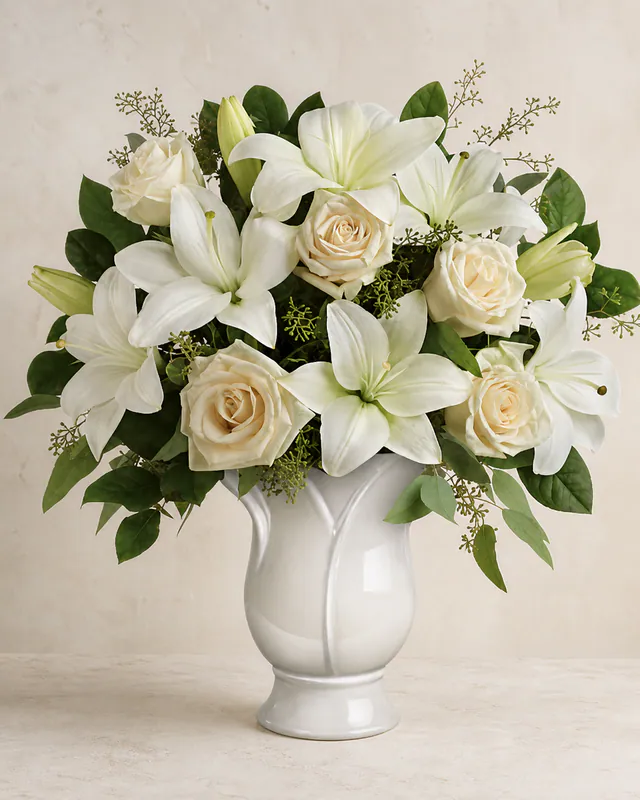
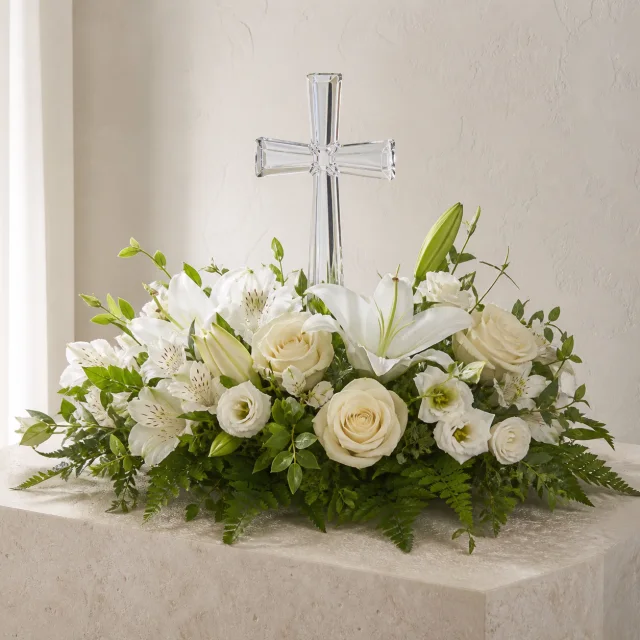
For a home gift, compare a manageable arrangement such as Gentle Embrace with the available space and the recipient’s preferences. For an approved service delivery, a basket can be an option without assuming responsibility for the family’s main tribute. Serenity Basket offers different scales; check the selected size rather than choosing by the first photograph alone.
Review the total cost, delivery details, and sender name before payment. Bloom Lane is an independent florist; its funeral-home pages do not establish affiliation with those venues. Keep any internal purchase record separate from the personal card. After sending, do not ask the recipient for a testimonial or a business response in return for the gesture.